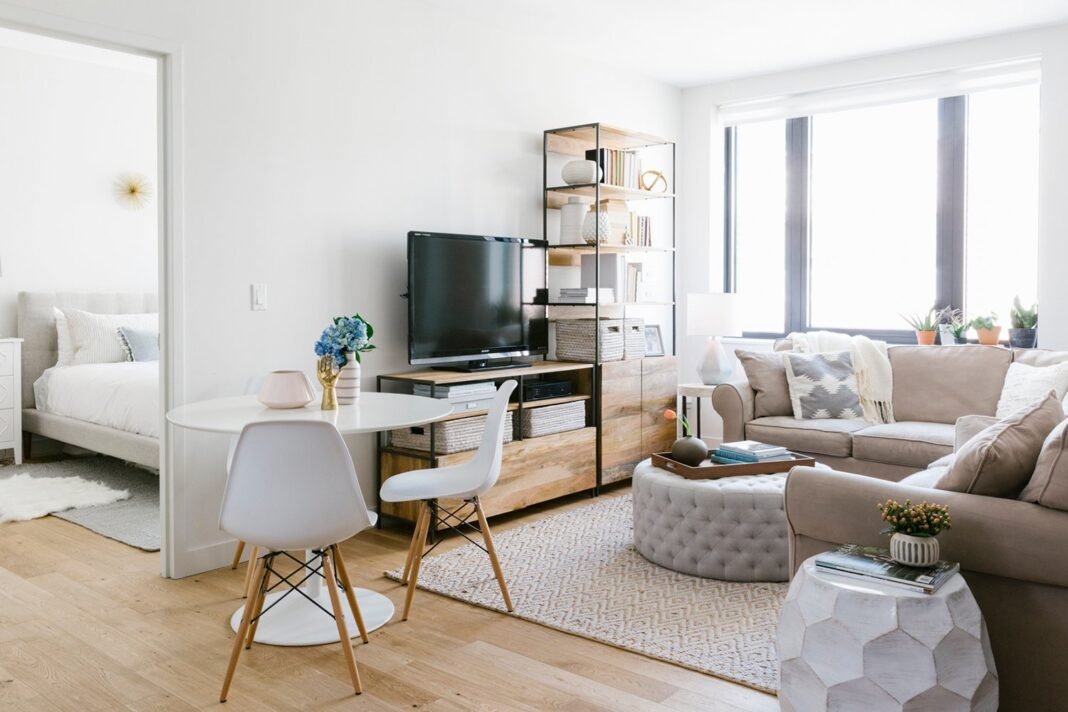

Designing a small living room can feel like solving a puzzle—especially when you need to fit a TV without disrupting the space’s balance or charm. Whether you’re dealing with a tiny apartment or a cozy corner of your home, the good news is that you don’t need to sacrifice style or comfort to accommodate your entertainment setup.
The key is finding thoughtful, space-saving solutions that work with your room’s dimensions and layout. From creative TV mounting to dual-purpose furniture, here are practical, stylish ideas to help you create a functional, well-designed small living room—TV and all.
1. Mount the TV on the Wall to Save Floor Space
One of the easiest ways to open up your living room is by wall-mounting your television. Not only does this free up surface space, but it also offers a clean, minimalist look that helps reduce visual clutter. When you’re short on square footage, the last thing you want is bulky furniture taking up valuable real estate.
To make the most of this setup, consider running cords discreetly through the wall or using cord covers to keep things neat. Pair the mounted TV with floating shelves for added storage or decor without taking up floor space.
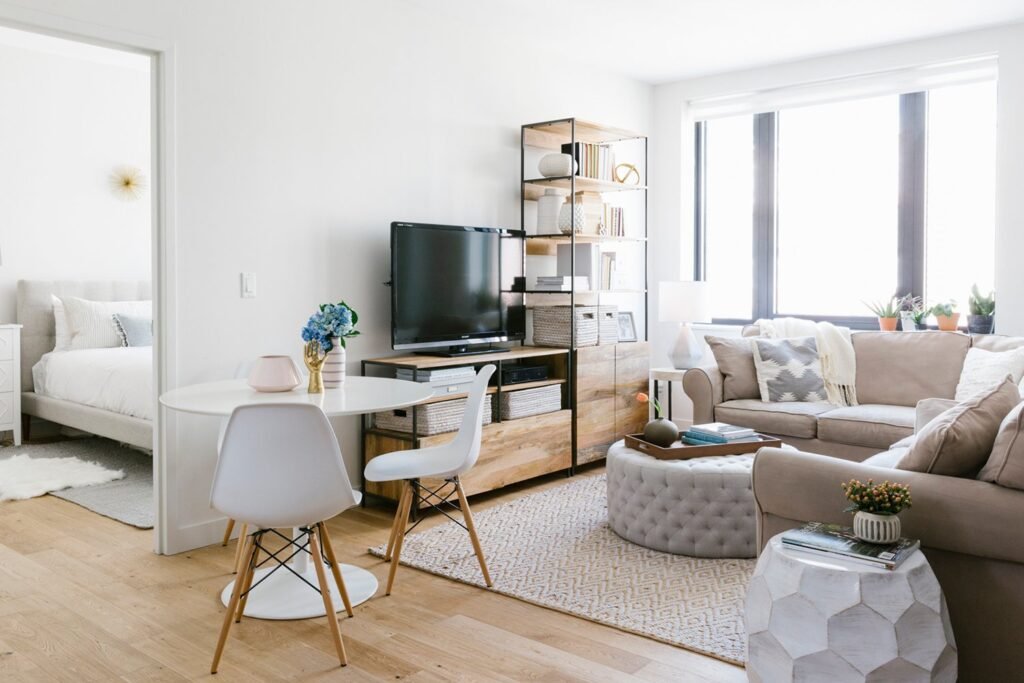
2. Place Your TV Above a Console or Cabinet
If mounting isn’t an option, a slim, low-profile media console can provide both support for your TV and extra storage. Opt for a console with closed cabinets to tuck away electronics, remotes, and other essentials, keeping the space tidy and stylish.
For a cohesive look, choose a piece that matches your existing furniture in tone or texture. This helps the console blend in rather than dominate the room. And if you’re short on space, consider a corner unit to maximize every inch.
3. Incorporate the TV into a Gallery Wall
Rather than letting the television be a visual eyesore, make it part of your décor by building a gallery wall around it. Surround your TV with framed artwork, prints, or photos to turn the entire area into a design feature. This approach draws the eye outward and helps the screen blend seamlessly into the room.
Use matching or complementary frames to create visual harmony, and play with symmetry or asymmetry depending on your style preferences. The result is a layered, lived-in feel that’s both personal and practical.
4. Choose Multipurpose Furniture for Extra Functionality
In small spaces, every piece of furniture should earn its place. Look for items that serve more than one function—like a media console that doubles as a bookshelf, or a storage ottoman that can hold blankets while providing extra seating.
You can even consider using a credenza or dresser as a TV stand, especially if you’re working with a compact layout. The added drawers give you more room to store items discreetly, which is especially helpful in living rooms that also serve as multipurpose areas.
5. Hide the TV with Stylish Cabinetry or Sliding Panels
If you’d prefer to keep your screen out of sight when not in use, built-in cabinets or sliding panels can help. These features let you close off the TV when it’s not needed, transforming your living room into a more serene, design-forward space.
Look for furniture with retractable doors, or install a wall system with sliding panels that match your wall color or decor. This trick works especially well in homes where aesthetics are a priority and technology should take a backseat.
6. Embrace a Corner Setup
Don’t overlook corners when placing your TV. A corner-mounted setup can work wonders in tight layouts, especially if your furniture is arranged diagonally or if the room has an unconventional shape.
This method helps free up wall space and keeps the TV visible from multiple seating areas. You can pair it with a triangular media unit or floating shelves to maintain an open, airy feel.
7. Design Around the Focal Point
If your living room has a fireplace, large window, or bold piece of art that acts as the focal point, it’s important to position your TV without competing for attention. Try placing the television adjacent to the focal feature or off to the side, using décor to balance the visual weight.
You can also integrate the TV directly above a fireplace if your wall structure allows it. Just be sure to mount it at the right height to ensure comfortable viewing, and be mindful of heat exposure.
8. Use a Moveable TV Stand or Swivel Mount
For rooms that serve more than one purpose, flexibility is key. A rolling TV cart or swivel wall mount gives you the ability to reposition your screen based on your needs—whether you’re watching from the couch, dining table, or even a pull-out bed.
These options work especially well in open-plan spaces or studio apartments where a static setup might not be ideal. Just ensure cords are safely managed to avoid a cluttered or unsafe look.
Final Thoughts
Designing a small living room with a TV may feel like a challenge, but with a little creativity and the right furniture, it’s entirely possible to achieve a harmonious and functional space. Whether you choose to highlight your television as part of your decor or prefer to keep it subtly tucked away, the key is making intentional choices that reflect both your aesthetic and lifestyle.
Your living room should feel like a place to relax, gather, and unwind—and with the right layout, your TV can be a part of that without dominating the space.